There is an exact moment when you arrive in Puno and feel it in your chest. The air changes, becomes lighter, and your body lets you know that you are on another level. That is the instant when the adventure truly begins. But anyone who has walked through these lands knows that the real magic is not only in the landscape, but in how you adapt to it.
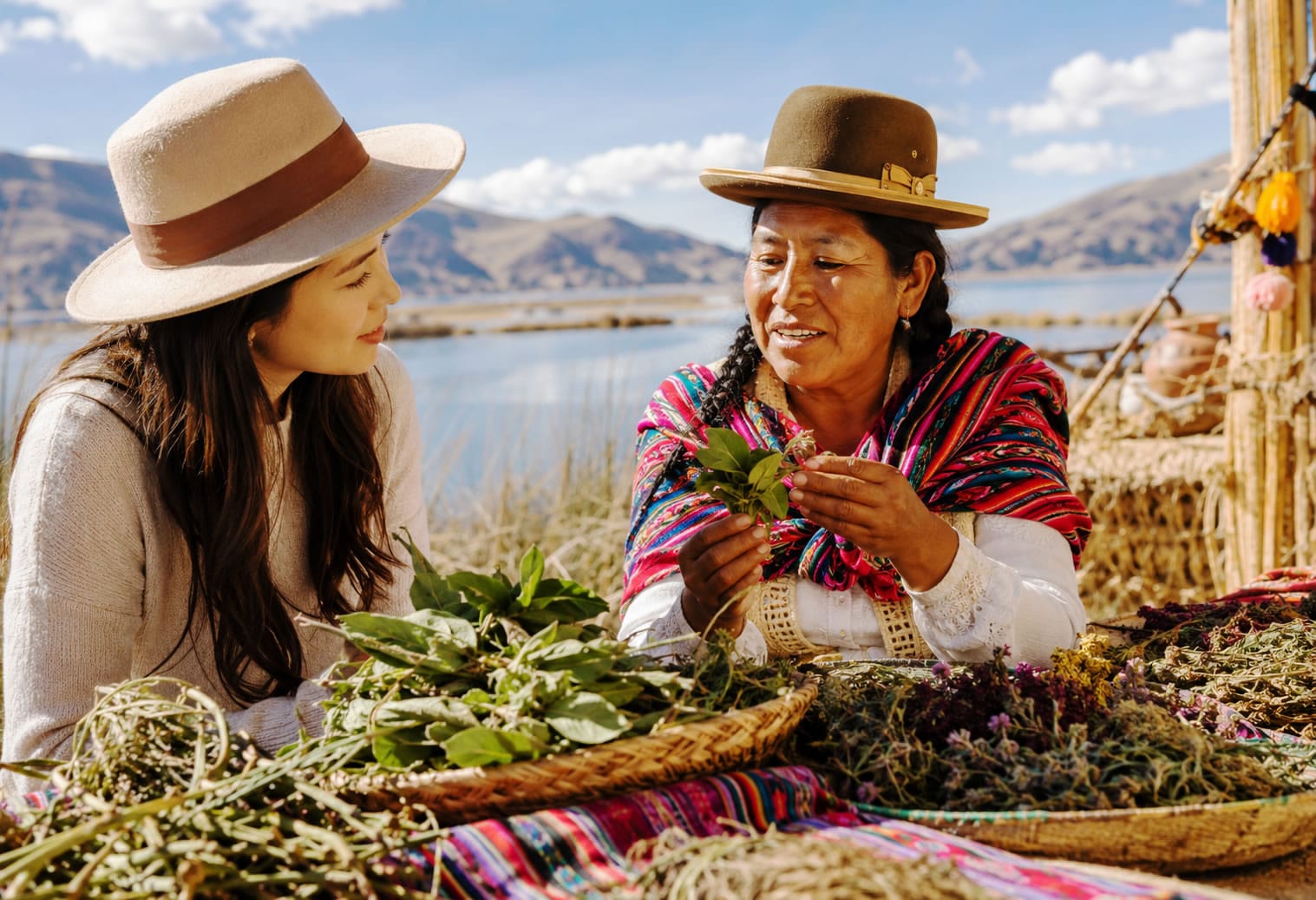
You have probably already smelled that unmistakable aroma in the local markets, a mixture of eucalyptus, damp earth and something wild that awakens your senses. Here, medicine does not come in glass bottles, but grows among the stones, resistant to the wind and cold. The grandmothers at the stalls know it, the guides know it, and now it is your turn to discover it.
It is not just about relieving discomfort; it is about understanding the rhythm of the Andes. We are going to talk about those herbs that bring back your breath after a steep climb and calm your stomach after an intense day. Because travelling well also means knowing how to accept what nature offers you so you can keep walking. This is what you need to know to take a piece of this wisdom with you.
Why do they grow here and not elsewhere?
The medicinal plants of Puno grow here in a unique way thanks to an exceptional combination of factors that are not easily replicated in other regions:
the extreme altitude (3,800-4,500 m.a.s.l.) and intense UV radiation force these species to develop defensive compounds such as essential oils and antioxidants that enhance their therapeutic properties; the high-Andean climate, with night frosts and marked seasonality, regulates their flowering cycles and concentration of active principles;
volcanic soils, rich in minerals and well drained, favour the development of deep roots and specialised metabolisms; and the influence of Lake Titicaca generates microclimates that moderate environmental conditions. Added to this is the fact that many of these plants are endemic, meaning they evolved over millennia exclusively in the Andes of southern Peru, and that the ancestral knowledge of the Aymara and Quechua communities regarding their cultivation and sustainable harvesting has allowed their quality to be preserved. For this reason, when visiting Puno, the traveller not only discovers unique landscapes, but also gains access to plants whose medicinal power is fully expressed only in this unrepeatable environment.
The essentials during your trip
Chachakuma (Senecio graveolens or tephrosioides): This plant can grow up to 45 cm tall, is branched and very fragrant, and has been used for centuries by Indigenous populations to counteract the effects of altitude sickness (soroche), stomach ache and blood pressure. It is often known as “green gold”, which is frequently linked to its commercial value and traditional use as an infusion.
Muña (Minthostachys setosa): Muña, from a woody plant that grows in high-Andean areas between 2,500 and 3,500 m.a.s.l., has many healing properties, as well as being cicatrising and a good alternative for reducing extreme pain.
Airampo (Tunilla soehrensii): It is a cactus native to the Andes, recognised for its striking flowers and its intensely red fruits. Beyond its beauty, this plant is valued for its natural properties: it helps reduce inflammation, regulates blood sugar and cholesterol levels, and strengthens defences thanks to its high antioxidant content. In Andean tradition, its seeds are prepared as infusions to relieve fever and tiredness, while the gel from its leaves is applied directly to the skin to soothe irritations and help with healing.
Ch´iri Ch´iri (Grindelia boliviana): It is a small plant with golden flowers that grows in the Andean valleys of Puno and Cusco, and for generations has been an ally of communities in relieving respiratory discomfort and caring for the skin. Science has confirmed what Andean sages already knew: its leaves and flowers contain essential oils and natural compounds with the ability to fight common bacteria, making it valuable in supporting the healing of superficial wounds or relieving irritations. In local tradition, it is prepared in infusions, steam treatments or ointments, and its fresh aroma is part of the sensory landscape of the high plateau.
Dandelion (Taraxacum officinale): It is that plant with yellow flowers and “fluff” that flies in the wind, common in the fields of Puno, which hides great power for the traveller’s wellbeing. Known for its gentle but effective action, it helps cleanse the body, supports digestion after abundant meals and aids liver and kidney function thanks to its antioxidant compounds. In Andean tradition, its tender leaves are included in salads and its roots are prepared in infusions to feel lighter and more energetic after a day walking through the high plateau.
Sillu Sillu (Lachemilla pinnata): It is a herbaceous plant native to the high-Andean areas of Puno, characterised by its lobed leaves and its ability to retain drops of dew on its surface. In Andean pharmacopoeia, it is mainly used for its anti-inflammatory, diuretic and antiseptic properties: infusions made from its leaves are used to support kidney function, relieve digestive colic and reduce inflammation, while its use in compresses is intended for topical applications on eye or skin irritations.
Paico (Dysphania ambrosioides): Also called epazote, it is an aromatic plant of ancient use in the Andes that stands out for its direct action on the digestive system: it helps eliminate intestinal parasites, reduces colic, gas and indigestion, and relieves menstrual discomfort thanks to its antispasmodic and anti-inflammatory compounds. In Puno, it is common to find it in local markets or as part of the welcome infusions offered by communities to their visitors. As a precaution, it is not recommended during pregnancy or in high doses; its use should be guided by people with traditional knowledge or a health professional.
Plantain (Plantago major): Known in Quechua as wich'uru, it is a plant with broad, elongated leaves that grows wild along paths and in damp areas of Puno, valued for its healing, anti-inflammatory and expectorant action. In traditional Andean medicine, its fresh or dried leaves are prepared in infusions to relieve coughs, bronchitis and stomach discomfort, while its juice or poultice is applied directly to wounds, scratches or bites to speed up healing and reduce inflammation. Plantain is an accessible and practical resource: many communities include it in their natural first-aid kits and it can be easily found in local markets as part of the medicinal herb offering.
Sage (Salvia officinalis): It is an aromatic plant with greyish leaves and an intense aroma. Its anti-inflammatory, antioxidant and digestive properties make it useful for relieving stomach discomfort, throat irritations, which are common due to the cold high-plateau climate, and menstrual symptoms, while as an infusion or gargle it helps soothe coughs and freshen the breath. Sage represents a practical and accessible resource: many communities include it in their welcome herbal teas or offer it as part of local gastronomic experiences. As a precaution, its consumption is not recommended during pregnancy, breastfeeding or in people with neurological conditions without professional supervision; its therapeutic use should be moderate and guided.
Traveller-to-Traveller Tips: Your Experience with Herbs in Puno
Small details that make the difference between a good memory and an authentic, responsible experience.
Preparation: The secret is in the lid
Not all infusions are prepared in the same way. To make the most of aromatic herbs such as muña, sage or paico, use freshly boiled water and cover the cup for 3-5 minutes while it rests. Why? Because the essential oils that give them their aroma and properties are volatile: if you leave the infusion in the open air, they evaporate and you lose part of their benefit. A simple trick that locals know well and that you can also apply at your accommodation or during a trek.
Health: Nature complements, it does not replace
Andean medicinal herbs are a valuable ally for wellbeing, but they do not replace professional medical care. If you experience serious symptoms such as a high fever, difficulty breathing, intense pain or an allergic reaction, go immediately to a health centre.
Souvenir: A small bundle of herbs is worth more than a magnet
Instead of another decorative object, consider taking with you a small bundle of dried herbs (muña, chachacoma, plantain) bought directly from an artisan woman or at a local market. It is not only a souvenir with the aroma of Puno, but you also support the family economy and take home a little piece of Andean wisdom to share. Extra tip: Ask them to explain how to prepare it and what it is used for; that way, every time you use it, you will remember your trip with all your senses.
Were you surprised by the benefits of these herbs? There is still so much more to explore! Plan your next getaway with us and get ready to immerse yourself in Puno’s great herbal pantry.
The high plateau awaits you with open arms!