
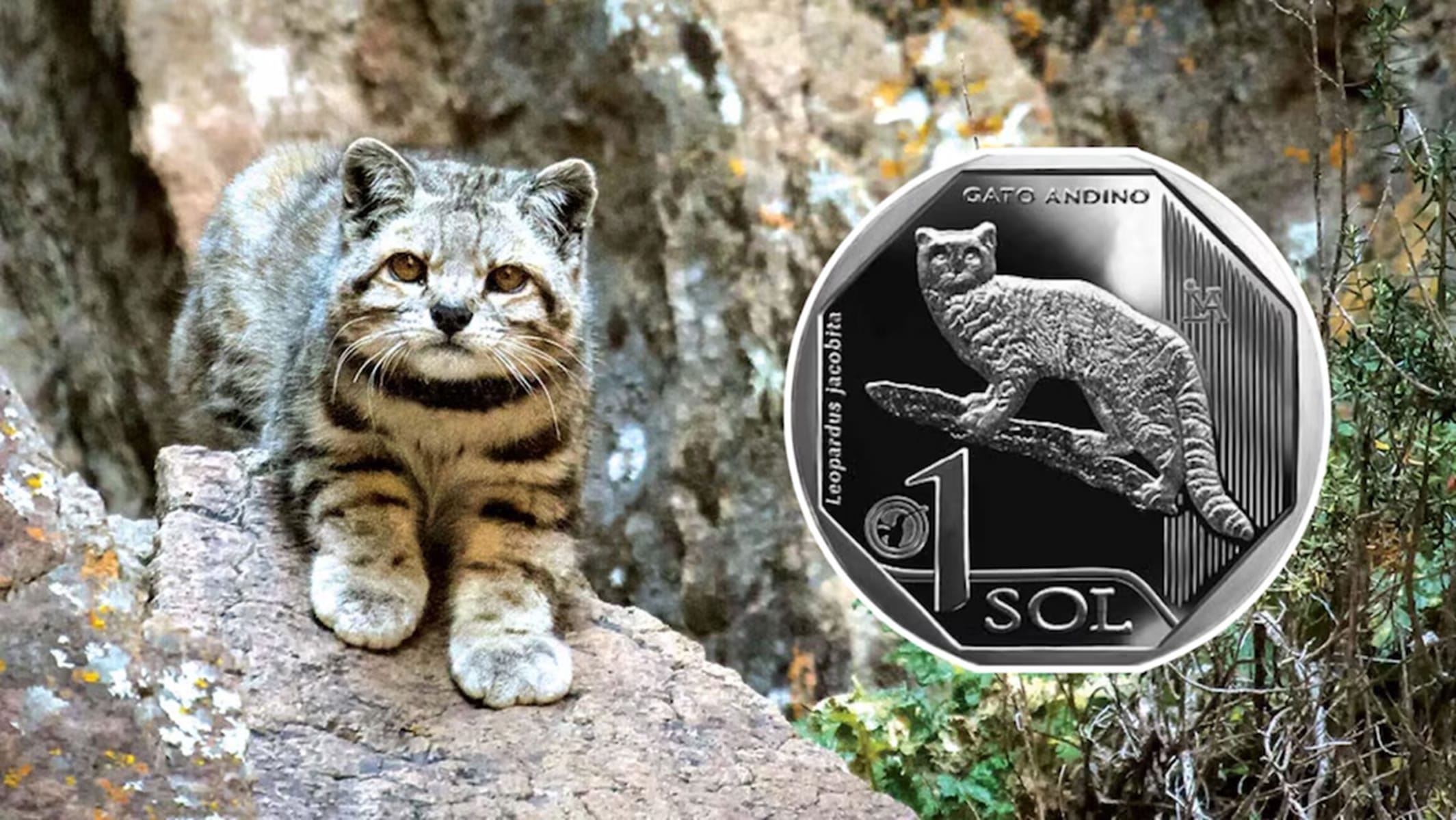
Have you ever heard of the feline that walks through the puna without leaving a trace?
On the summits where the wind cuts like a knife and the rocks hold the memory of the gods, there is a being that the elders name in a low voice: the Andean cat, the grey ghost of the Andes. They say its spotted fur blends with the storm clouds, that its eyes capture the moon and that its steps are so silent that not even the vizcachas feel it approaching. For Quechuas and Aymaras, it is the guardian of the Apus, messenger of rain and fertility, a living bridge between earth and sky. Some call it Qhoa, the flying feline that brings thunder from the puquios. To see it is a blessing; to pursue it, a curse.
But today this sacred spirit is dying: fewer than 2,000 remain in the whole world, several in the heights of Puno, such as Allincapac (Carabaya), Cuyocuyo (Yunguyo), Ayaviri (Melgar) and other places where this mythical animal has appeared. As you cross the high plateau or sail across Titicaca, beneath the rocky shadows, it still breathes… in absolute silence.
Scientific Description
The Andean cat, or Leopardus jacobita, is a small feline endemic to the high Andes, above 3,500 metres above sea level, with greyish spotted fur, a long, thick tail, which hunts vizcachas in rocky habitats. Classified as “Endangered” by the IUCN, it measures around 60-80 cm in length and weighs up to 4 kg; its records in Peru range from skins and faeces to modern photos taken with camera traps.
Records in Peru and Puno
In Puno, its presence was confirmed at the priority site of Andenes de Cuyocuyo, in the district of Cuyocuyo, in 2018, with 12 detections through 1,275 camera-trap days, showing both daytime and night-time activity. Other sightings include Pitumarca (Cusco) in 2022, hunting vizcachas, and the Salinas y Aguada Blanca National Reserve (Arequipa) in 2015. Threats include habitat loss, domestic dogs and illegal hunting.
Cultural Significance
For Quechua and Aymara peoples in Puno and southern Peru, it represents fertility, protection and spiritual connection with the mountains (achachilas); it appears in myths such as “titimisi” (guardian of herds), as well as in textiles and rituals. Studies highlight its biocultural value in communities such as Ayaviri (Puno).
Its value on Peruvian currency
The Andean cat was chosen for the “Threatened Wildlife of Peru” series by the Central Reserve Bank. It appears on the 1 Sol coin issued in 2019. On the reverse, its characteristic silhouette can be seen alongside the text “GATO ANDINO Leopardus jacobita” and the corresponding year. It is official recognition of its rarity and the urgent need for its protection.
Place in the Andean worldview
In Quechua and Aymara tradition, it is a guardian of the Apus, the sacred mountains. It is associated with the Qhoa or Qoa, a mythical flying feline that controls rain, thunder and the fertility of the land. It is also linked to the Awatiri Mallku, the supernatural shepherd spirit of llamas and alpacas, a symbol of abundance and protection of livestock. Seeing it or dreaming of it is interpreted as a sign of good fortune or a message from the spirits of the puna.
Current Conservation, Threats and why almost nobody sees it
There are fewer than 2,000 individuals left in the whole world; it is classified as critically endangered by the IUCN. The main threats are: mining expansion, livestock overgrazing, which reduces prey such as vizcachas, climate change, including droughts and habitat fragmentation, and occasional hunting due to retaliation or superstition. Its extreme shyness and nocturnal habits make it the “ghost of the Andes”: most records come from camera traps, not direct sightings. Organisations such as WCS, Pro Carnívoros and SERNANP promote protection in places such as Cuyocuyo, encouraging collaboration with communities to prevent habitat fragmentation. In 2025, its image inspires commemorative coins and awareness campaigns.