
You have surely heard something about Peru, starting with Machu Picchu, a national emblem, and of course its exquisite gastronomy, which for several years was listed as one of the best gastronomic destinations in the world. Puno’s gastronomy is not far behind, as it reaffirms this recognition with a wide variety of dishes popularly known among the local people, most of whom are originally from rural areas whose generous lands provide the ingredients. We are talking about Andean grains, tubers and herbs, among which quinoa, cañihua, potato, chuño, oca and others stand out. Despite the passing of the years, traditions have been maintained, becoming a fundamental pillar of Puno’s gastronomy beyond the influence of refined techniques typical of haute cuisine.
What are these typical Puno dishes?
Fried trout
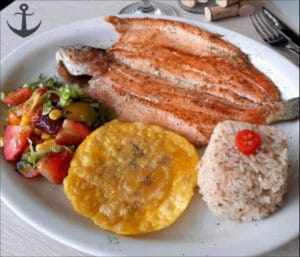 Prepared using fish from Lake Titicaca as its main ingredient, which contains proteins, vitamins and minerals. It has a very similar appearance to salmon, which causes confusion, and tourists often choose to call this fish “Peruvian salmon”.
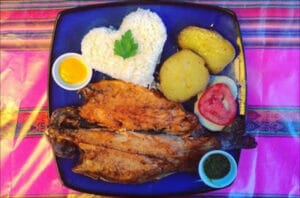 Trout is a very nutritious food, as its flesh contains potassium, phosphorus, zinc, magnesium and iron. It is fried and served with boiled potatoes, corn and chuño, or served with chips and rice, and is often accompanied by a criolla salad, as is already customary in Peruvian dishes.
Kankacho Ayavireño
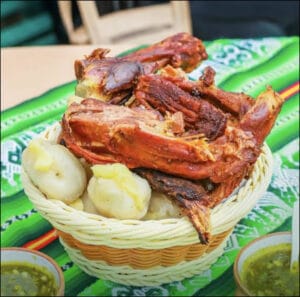 Kankacho is perhaps the most representative dish of Puno, as it originates from the city of Melgar, in Ayaviri, Puno. It consists of lamb roasted with its skin. The meat is marinated overnight in a combination of vinegar, chillies, garlic, lemon, cumin and other spices.
Kankacho is an essential dish at festivals and special events in the city and in much of the region. It is served with baked potatoes, moraya (freeze-dried potato) with cheese and chilli sauce, also known as uchucuta, or it can also be accompanied by an Andean sauce called ocopa.
Trout thimpu or Challwa Thimpu
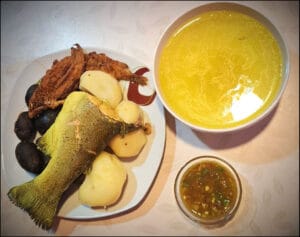 Thimpu is a traditional stew from the lake area of the high plateau and also from various parts of the vast Peruvian highlands, especially areas where lakes, lagoons or rivers predominate, making it easier to obtain the main ingredient, in this case trout. This dish is characterised by the combination of tubers and grains, and it is also generally combined with a portion of fried ispi, a small fish endemic to the lake. Trout provides a delicate flavour and a soft texture that contrasts perfectly with the other ingredients.
In addition, it is a rich source of protein and omega-3 fatty acids, making this dish nutritious and healthy. This dish is usually prepared at celebrations and family gatherings, being a sign of the hospitality and love for home cooking that characterises families from Puno and the Peruvian highlands. The combination of fresh ingredients and slow cooking allows each flavour to blend harmoniously, resulting in a thimpu that wins over any diner.
Alpaca Chicharrón
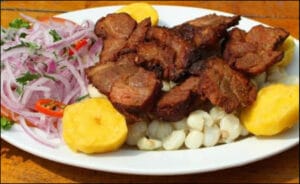 It is a delicious and nutritious dish from Puno. First, the meat is cooked until the water evaporates, then it is browned in its own fat. It is served with chuño, potato and toasted highland corn (cancha serrana). Sometimes it is served with criolla sauce.
Alpaca meat is recognised as one of the most nutritious foods thanks to its classification as lean meat and one of the healthiest, as it contains 22% protein, 56 milligrams of cholesterol per 100 grams of meat and a fat content of 3%, which is why it is considered a light meat par excellence.
 Quinoa pesque
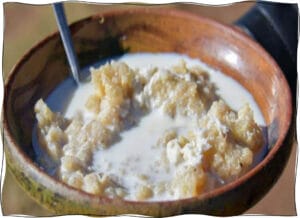
Pesque is a Puno dish whose main ingredient is quinoa, as its name indicates. In the villages of the Puno region, this stew is prepared for breakfast and served with fresh milk and cheese. It is very delicate, easy to digest and comforting for those who eat it. To cook it, according to housewives, ingredients such as quinoa, cheese, water, salt, butter and fresh milk are needed.
 Chairo
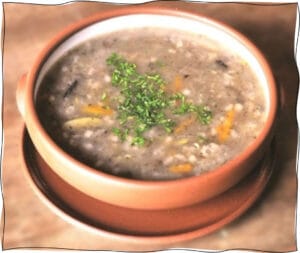
This Puno soup is packed with nutrients and is one of the most requested by locals after each working day. This broth includes lamb, chalona (dried lamb meat), black chuño, potatoes, carrot, celery, broad beans, garlic, onion, salt and oregano.
 Head broth
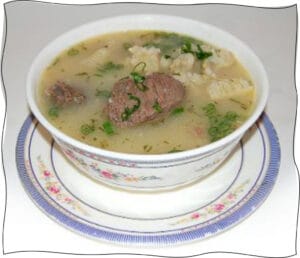
To prepare this dish, a pig’s head (pork) or lamb’s head must be cooked in pieces. Onion, garlic, peeled potatoes, black or white chuño are added. When serving it, it should be presented with a dressing of red ají panca, onion and tomato; all these ingredients are spread over the boiled preparation. The broth is served separately. Nowadays, it is accompanied by rice.
 Pachamanca
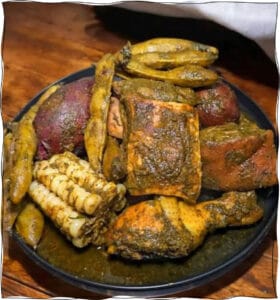
“Food of the universe” or “earthen pot”, is a traditional Andean dish that, as its name indicates, is prepared outdoors, in a hole dug in the ground and heated with stones. Various ingredients are placed in the hole, such as pork, lamb, beef, potatoes, broad beans, corn and aromatic herbs, and everything is covered with banana leaves. The hole is covered with earth and left to cook for several hours. Pachamanca is a preparation that requires a great deal of effort, but the result is a delicious and unique meal.
Huatia
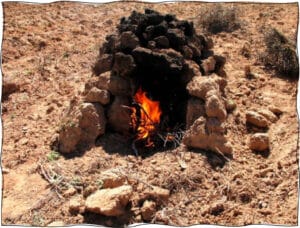 Huatia or huatiada in Quechua and kurpay manka in Aymara is a typical Puno dish and is also found in various Andean areas of Peru. Its name comes from an ancient oral tradition, a myth that surrounded the villages of Huarochirí, Lima, which tells of a deity known as Huatiacuri or Watya Quric (collector of watya) who, according to tradition, looked after crops and accompanied farmers in their work, but had a ragged appearance, feeding only on potatoes roasted in the earth.
This is why the story and memory of that deity have endured to this day, leaving “huatia” or “watya” as the name by which it is known today, and later it would also influence the name of pachamanca.
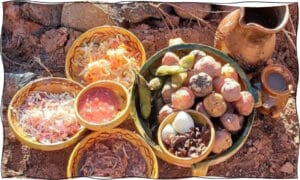 As for its preparation, it shares similarities with pachamanca, with the difference that instead of using hot stones, k´urpas (clods of earth) are used to make a small oven, enough to maintain a high fire and heat the clods and, later, select freshly harvested potatoes to place them inside the oven once the fire has gone out. Once placed inside, they are buried for around 20 to 25 minutes, finally uncovered and served on a large blanket to share and accompany with a sauce or the popular Ch'aku.
Join a gastronomic tour with Puno Tours and we will help you find the best places to taste these typical dishes along our Quechua and Aymara routes. We look forward to seeing you!